
Lens Antenna Technology

Up to 10 dB more gain
from the same horn

A 3D-printed lens fitted to the front of our ridged horns raises gain across the band without a larger antenna. We design the lens, print it and measure the result in our own chamber.

US Pat. No. 12,665,315
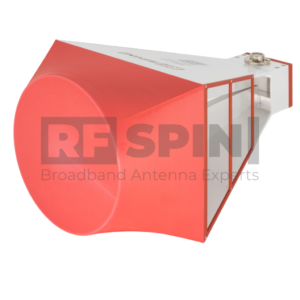
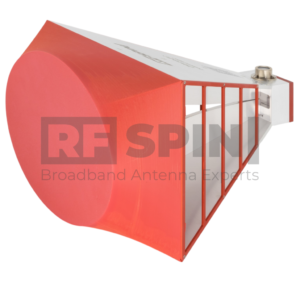
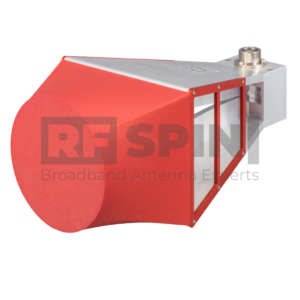
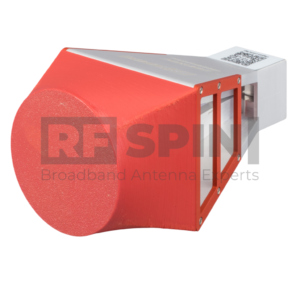
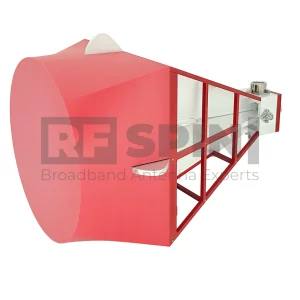
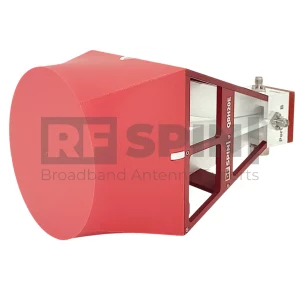
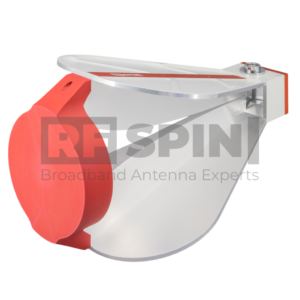
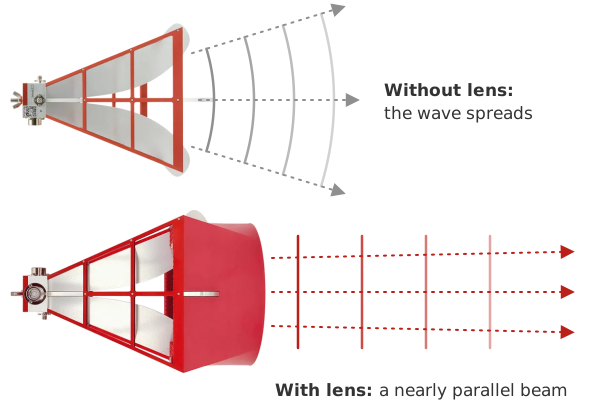
Photos of the horn without and with the lens: without the lens the radiated wave spreads, with the lens it leaves as a nearly parallel beam
How it works

A lens does for radio waves what a lens does for light

A horn radiates a wave that spreads. The lens seated in its aperture collimates that wave into a nearly parallel beam, the way glass does with light. The antenna becomes highly directional and its gain rises, while the horn keeps its geometry, band and broadband match.
What the extra gain buys you

More reach, more margin, the same antenna

Gain is not an end in itself. It is distance you can add, a noise floor you can push down, or a bigger horn you no longer need. Three situations where the lens pays for itself, and one where it does not.

Farther, or with more margin

At a fixed test distance the lens adds dynamic range. At a fixed dynamic range it lets you measure from farther away. The antenna in the setup is the same either way.

20 GHz+ without a bigger horn

At millimeter-wave frequencies every extra dB from a larger horn costs length, mass and plating precision. The lens adds the gain and leaves the horn alone.

When you are better off without it

A wide beam to illuminate a large device under test, near-field work, or a build where every gram and centimeter counts: take the base horn. Every removable-lens model has a base version without the lens.

The trade

What changes when you add the lens

Gain goes up, the antenna gets a little longer and heavier, and the horn itself stays as it was. Across the range the lens adds 6 to 10 dB at its peak, 10 to 40 % in length and 25 to 610 g, depending on the model.

DRH18-EC compared with DRH18-E

+10 dB

Gain at the peak, 14 GHz

+10 %

Length, 243 to 267 mm

+530 g

Mass

Unchanged

Horn geometry, band, connector

Track record

2021

Development of the lens begins

2022

First horns fitted with the lens

2024

US patent application filed, series production starts

2025

First lens antenna tested in a radome

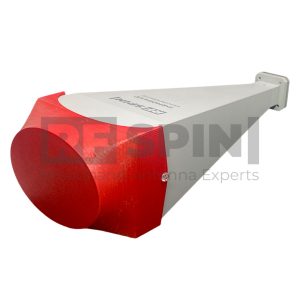
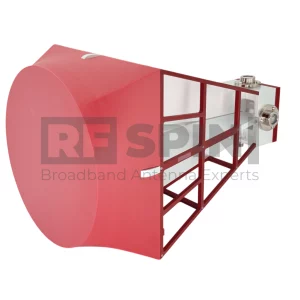
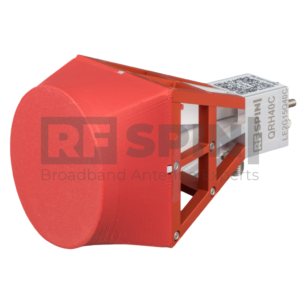
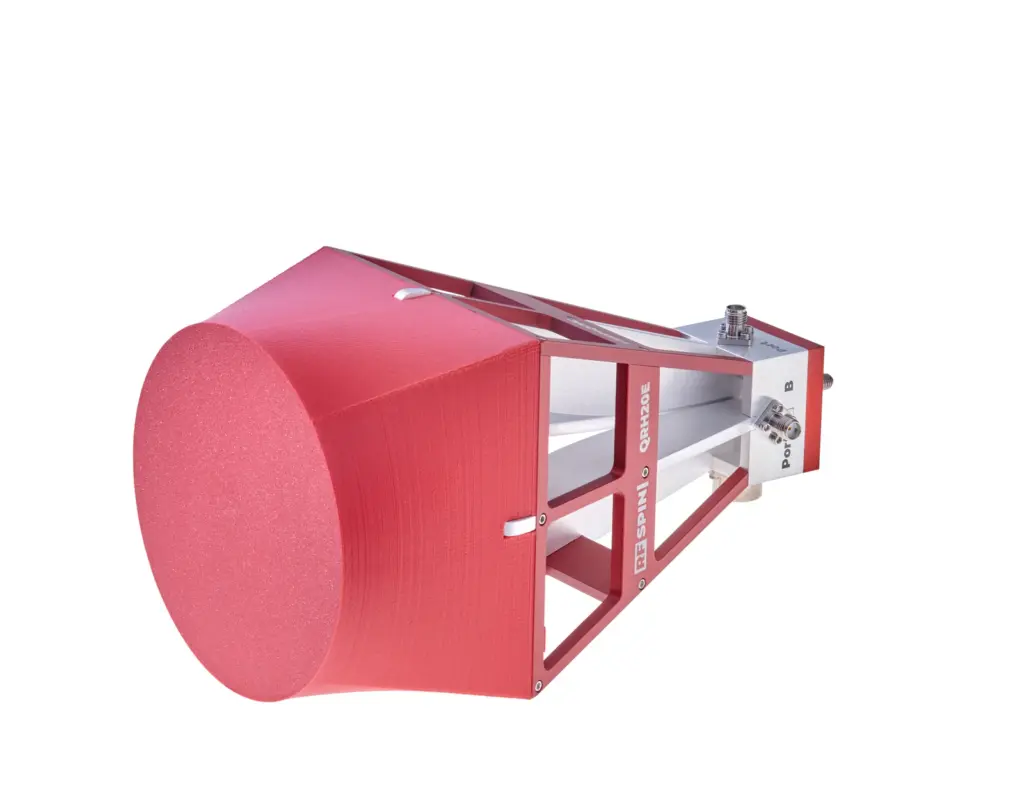
QRHX34 quad ridged horn antenna with its red integral lens
Patent

The antenna lens is covered by United States patent No. 12,665,315, granted on 23 June 2026.

The patent covers the lens as a product, and every lens antenna in the range carries it. It protects the shape of the lens, its internal structure and the material it is printed from.

US 12,665,315 B2 · Antenna Lens

Feb 2024

Application filed

Jun 2026

Patent granted

4

Inventors, all RF SPIN engineers

In-house

Designed, printed and verified

All RF SPIN technologies

Measured, not modeled

The same antenna, with and without the lens

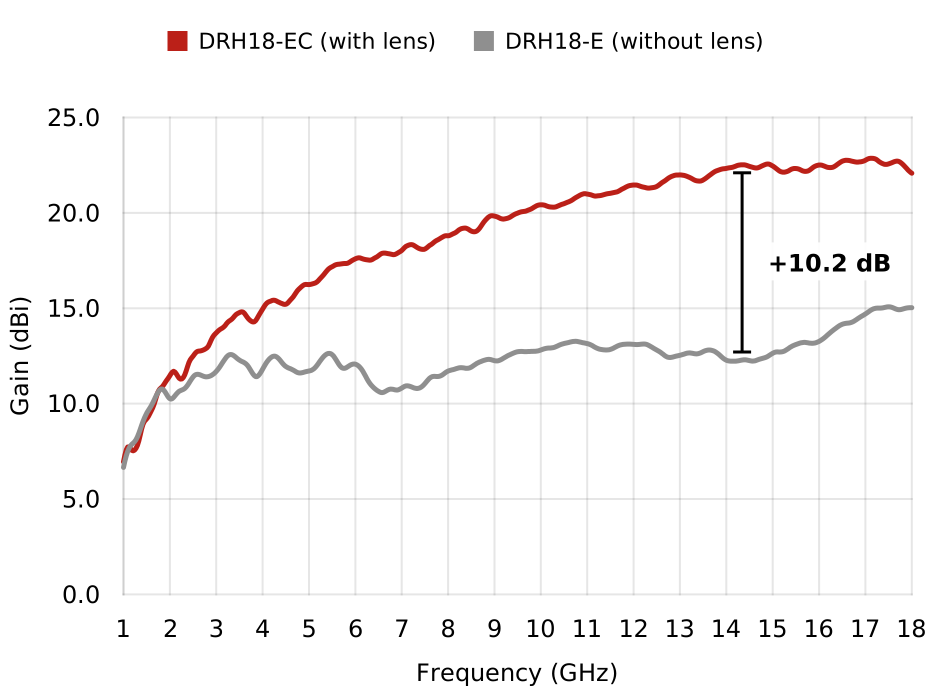
Both curves are typical data from our own chamber: the same horn design, with the lens and without it. Where the lens adds little, the chart says so.

Gain versus frequency from 1 to 18 GHz: DRH18-EC with the lens climbs from 7 to 23 dBi, DRH18-E without it stays between 7 and 15 dBi; the largest difference is 10.2 dB at 14.3 GHz
Gain vs frequencyDRH18-E and DRH18-EC · 1 – 18 GHz
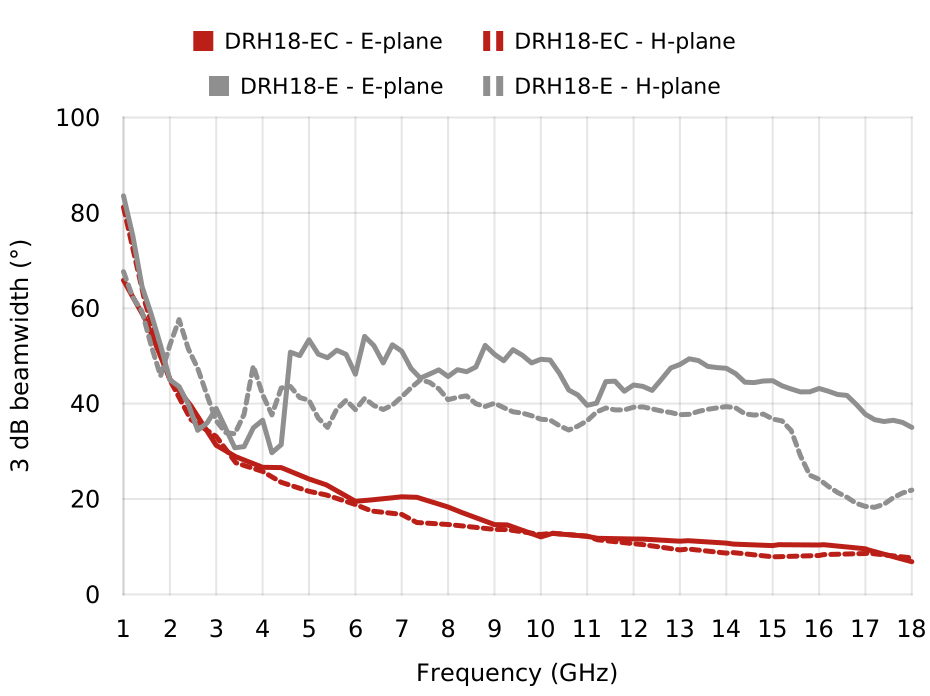
3 dB beamwidth versus frequency: above 3 GHz the lens narrows the beam steadily to about 8 degrees at 18 GHz, while the horn without it stays between 35 and 50 degrees
3 dB beamwidth vs frequencyE- and H-plane · same antennas
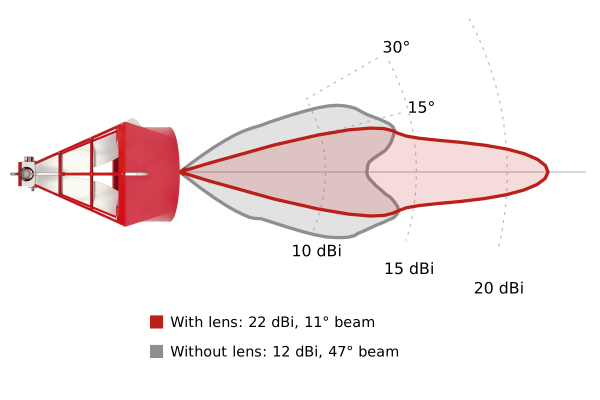
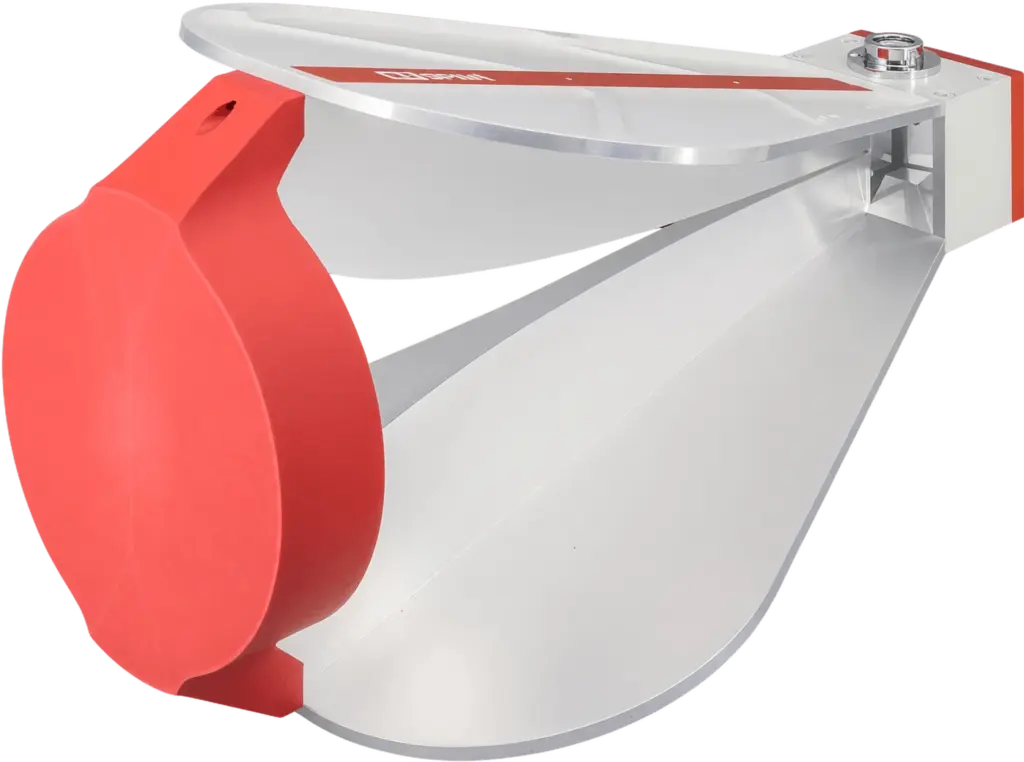
DRH18-EC photographed from the side with the measured E-plane radiation patterns at 14 GHz drawn from its aperture: without the lens a wide 47 degree lobe with 12 dBi on axis, with the lens a slim 11 degree lobe with 22 dBi
Radiation patternE-plane, 14 GHz · gain on axis, same scale in dBi

Measured on DRH18-E / DRH18-EC

+10.2 dB

Peak gain difference, 14.3 GHz

+6.5 dB

Average, 1 – 18 GHz

47° to 11°

3 dB beamwidth, 14 GHz

In plain terms: the same antenna reaches farther. The numbers behind that sentence ship with every unit, as its own measured data.

See the Antenna Portal

The range

The antennas that carry the lens

Single and dual polarized ridged horns from 500 MHz to 44 GHz. On most of them the lens is removable, so one antenna gives you two beamwidths. On a few it is part of the build and stays on.

Removable lens

The lens comes off and the base horn works on its own.

Single polarized
DRH10C

DRH10C (740 MHz – 10.5 GHz)

4 – 22 dBi · N connector · 1.76 kg

View product
DRH18-EC

DRH18-EC (1 – 18 GHz)

5 – 23 dBi · N connector · 1.40 kg

View product
DRH20EC

DRH20EC (1.6 – 20 GHz)

6 – 24 dBi · SMA connector · 442 g

View product
DRH30C

DRH30C (2.5 – 30 GHz)

5 – 22 dBi · K connector · 187 g

View product
DRH0844C

DRH0844C (8 – 44 GHz)

16 – 29 dBi · K connector

View product
Dual polarized
QRH11C

QRH11C (730 MHz – 11 GHz)

3 – 20 dBi · SMA connector · 1.50 kg

View product
QRH18EC

QRH18EC (1 – 18 GHz)

5 – 23 dBi · SMA connector · 1.37 kg

View product
QRH20EC

QRH20EC (1.7 – 20 GHz)

5 – 22 dBi · SMA connector · 477 g

View product
QRH40C

QRH40C (4 – 40 GHz)

6 – 22 dBi · K connector · 93 g

View product

Integral lens

The lens is part of the antenna and is not designed to be removed.

Single polarized
DRHX34

DRHX34 (500 MHz – 34 GHz)

2 – 24 dBi · K connector · 2.26 kg

View product
Coming soon

DRHX67 (to 67 GHz)

Dual polarized · in a radome
Coming soon

QRH20ECR (1.7 – 20 GHz)

QRH20EC in a radome

Coming soon

QRH43CR (to 43 GHz)

Every antenna is measured in our own chamber and ships with a calibration certificate. With the PLUS tier you also receive the measured data of your unit, and with PLUS ACCREDITED the certificate is issued by our accredited laboratory under ISO/IEC 17025. All of it describes the antenna as delivered, with the lens fitted. Take the lens off and the base horn works on its own, but those values and the certificate no longer apply to it.

Antenna data and certification
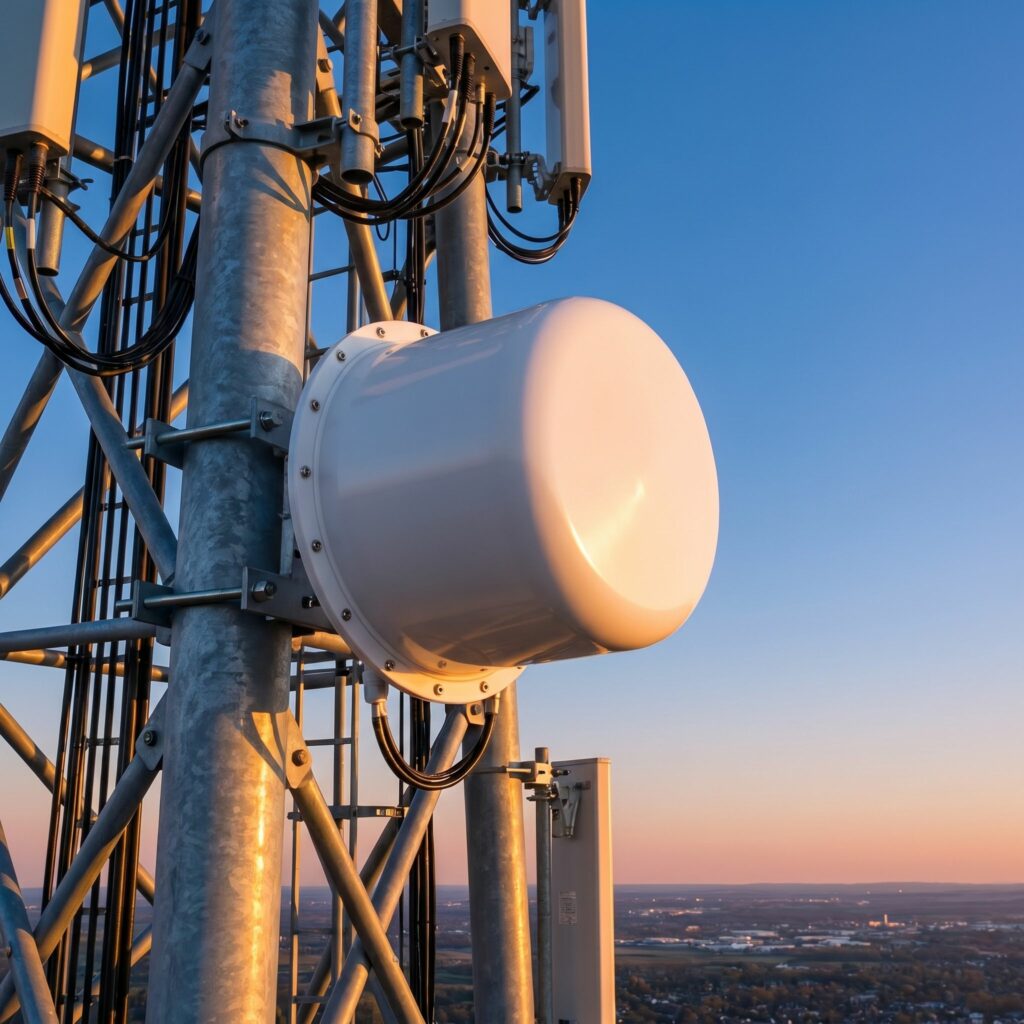
Lens antenna in a radome, deployed outdoors (placeholder photo)
Outdoor · Lens and radome

Gain, weather protection and outdoor duty in one antenna

A lens antenna inside one of our own radomes keeps the gain of the lens and adds the protection of the shell. One part number, one set of measured values, ready for the field.

The radome was developed around the antenna, not bought in, and the lens was designed to work behind it. RF SPIN is the world technology leader in lens antennas with a radome: what other teams still publish as research, we ship as a catalogue antenna with its own measured data.

Outdoor lens antennas

QRH20ECR

1.7 – 20 GHz

QRH43CR

up to 43 GHz

IP65

Ingress rating

QRH20EC seen from the front: the solid printed face of the lens
Materials & durability

A plastic lens on an aluminum antenna, and why that is fine

The lens is printed from ASA, an engineering polymer chosen for the same reason it is used on the outside of cars: it holds its shape and color under UV light and moisture.

The outer surface is printed solid, so the interior stays sealed against dust and damp, and the edges take repeated handling. In the radome build the assembly is rated IP65. Nothing about the lens asks the antenna to be treated differently from one without it.

What the lens withstands

ASA

Polymer stable under UV and moisture

Sealed

Solid printed surface

IP65

In the radome build

Take the next step

Pick an antenna, or pick our brains

Browse the lens antennas by polarization, or talk to the engineers who designed the lens and measured the results.